
Simulation EMR · Made in New Zealand

A simulation EMR for ward deterioration training

NZ-built, NZ Early Warning Score, feels like the record your staff already use.

The WOWsim observations screen for a fictional patient. The EWS chart plots temperature, respiratory rate and blood pressure over three days across coloured score bands. The EWS is 7, and the panel reads: Acute illness or unstable chronic disease. House Officer and PaR review within 60 minutes.
  1. The EWS chart Obs plot across the coloured score bands, the way they do on the ward chart.
  2. Record Obs Learners enter each set of obs here, or on the nurse’s tablet. The chart and the score update straight away.
  3. Scored for you Every set is scored with the NZ Early Warning Score, and the matching escalation steps appear at once.
  4. Times that fit the day All times in WOWsim are recalculated the moment a scenario starts – no more “yesterday” or “this morning” written into paper charts.
In the sim room

What each device does

Tap a number to see how WOWsim fits into a session.

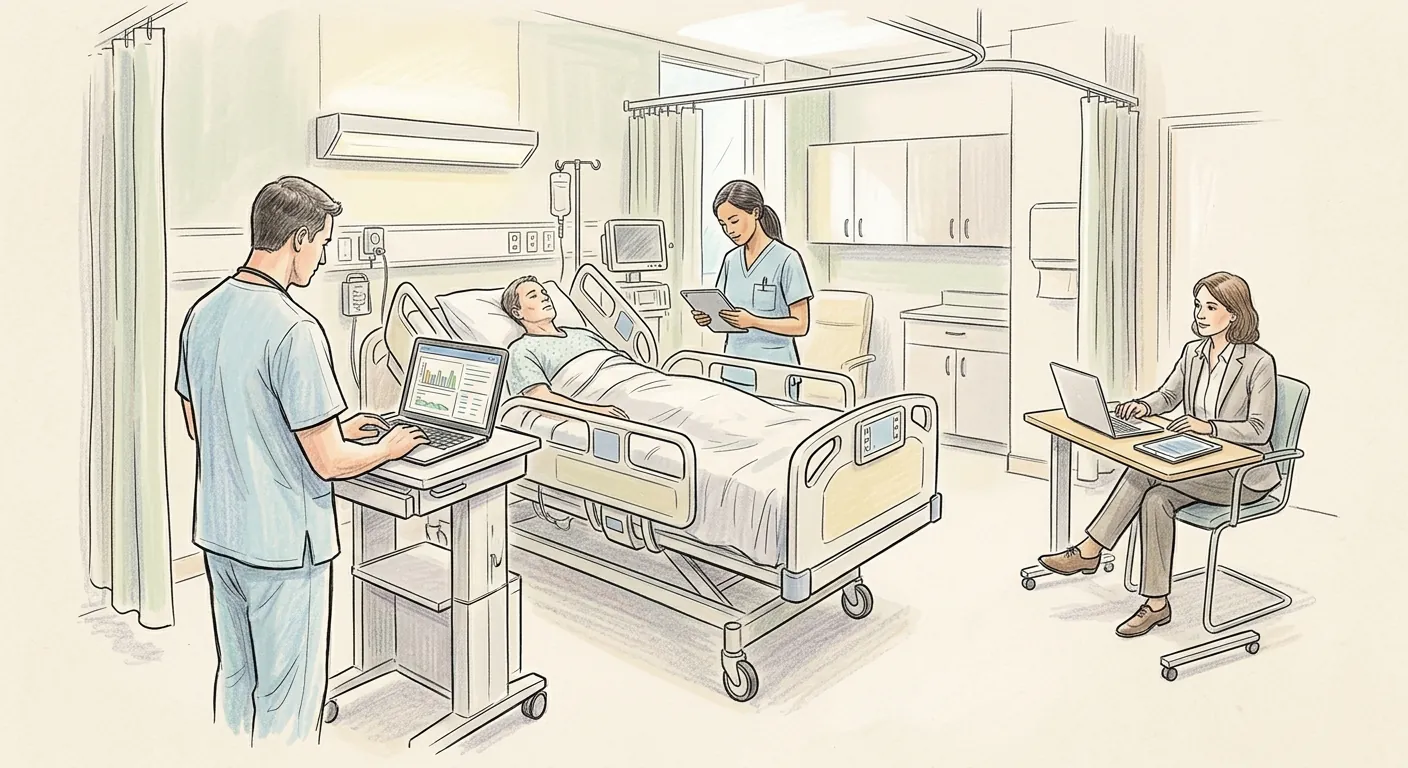
Sketch of a simulation room: a clinician types on a laptop on a wheeled workstation beside a patient in bed, a nurse holds a tablet, and an instructor sits at a desk with a laptop and a tablet.

Tap a number to find out more.

  1. The workstation on wheels

    The WOWsim screen: record obs with automatic EWS, notes, clinic letters, medications and Shared Goals of Care.

  2. The nurse’s tablet

    An optional tablet for the RN to enter patient observations.

  3. The instructor’s tablet

    The instructor’s Live Log of learner actions.

The instructor’s view

Follow every move from across the room

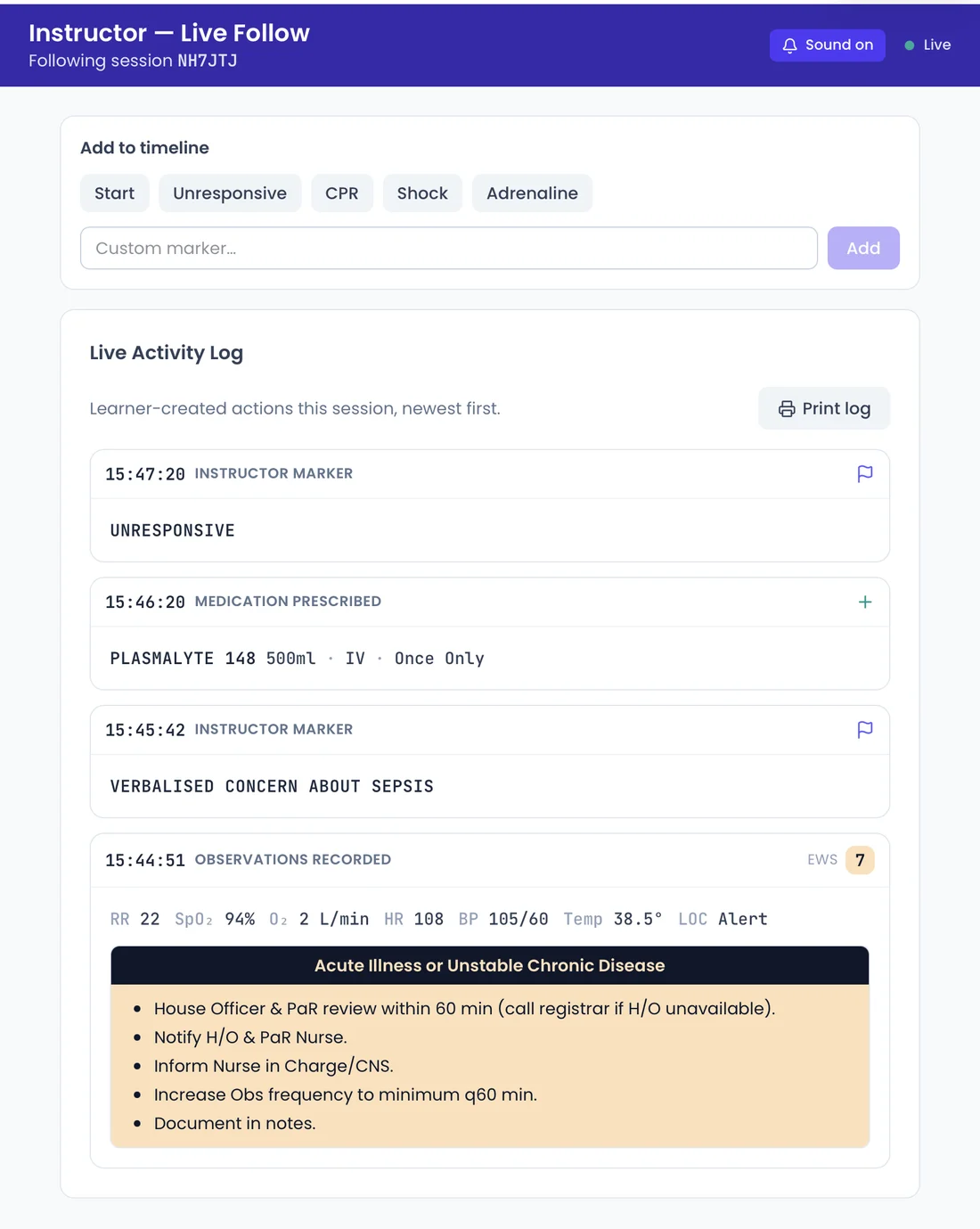
Scan the QR code on the Instructor screen with a phone or tablet, and you’re following the session live. Your learners’ actions appear the moment they make them, so you can watch the scenario unfold without standing over their shoulders.

Add your own markers along the way, and take a timestamped record of what happened into the debrief. More than one instructor can follow the same session, and everyone’s markers appear on every instructor’s device.

The instructor’s Live Follow screen: buttons to add timeline markers such as CPR and Shock, and a live activity log showing instructor markers, a prescription, and a set of observations with an Early Warning Score of 7 and the escalation response it calls for.

Tap a number to find out more.

  1. Live, with a discreet alert

    A discreet sound lets you know when a learner acts or another instructor adds a marker, so your eyes can stay on the room.

  2. Mark the moments that matter

    One tap records the time of events like CPR or a shock. Or type your own, such as “Verbalised concern about sepsis”. Every instructor following the session sees them.

  3. Learner actions, as they happen

    Observations and prescriptions appear in the log as soon as learners enter them, newest first, alongside your markers.

  4. Print it for the debrief

    Print the whole timeline, learner actions and instructor markers together. It’s still there when you move to the debriefing room.

  5. Scored, with the escalation response

    Each set of obs arrives with its Early Warning Score and the response it calls for, so you can see at a glance whether learners escalated as they should. Customised packages show your own hospital’s escalation pathway.

The depth

A patient with a history

The ease of producing .wowsim files means that simulation professionals can give their scenario patients richer back stories than ever before. This has a real effect on conceptual fidelity, increasing user engagement and creating extra learning opportunities. This example from a .wowsim file features a patient with Shared Goals of Care B and an agreed ceiling of care. How will your learners respond when she arrives on the ward in respiratory distress?

Clinic letter · 15:00Fictional patient

Respiratory Clinic Review — Severe COPD

From
Dr H. Renwick, Respiratory Physician — Christchurch Hospital Respiratory Clinic
To
Dr S. Okafor, General Practitioner — Linwood Health

Dear Dr Okafor,

Thank you for your ongoing care of Mrs Glenys Marsh, whom I reviewed in clinic.

Mrs Marsh has severe COPD (post-bronchodilator FEV1 32% predicted, FEV1/FVC 0.46), GOLD group D, with frequent exacerbations. She has required non-invasive ventilation on two previous admissions for hypercapnic respiratory failure. She is a chronic CO2 retainer with a baseline SpO2 of approximately 88–90% on room air. She stopped smoking two years ago (45 pack-year history).

Her current maintenance therapy is tiotropium, fluticasone/salmeterol and a salbutamol reliever, with good inhaler technique. She is not currently on home oxygen; ambulatory assessment did not meet criteria. We have completed a written self-management plan and supplied a rescue pack of prednisone and doxycycline (she is penicillin allergic).

Importantly, given her trajectory we have begun early discussion about ceilings of treatment. She would accept NIV but has expressed she would not wish prolonged invasive ventilation. This is documented for reference during any acute admission.

Kind regards,
Dr H. Renwick
The relief

No more tatty folders

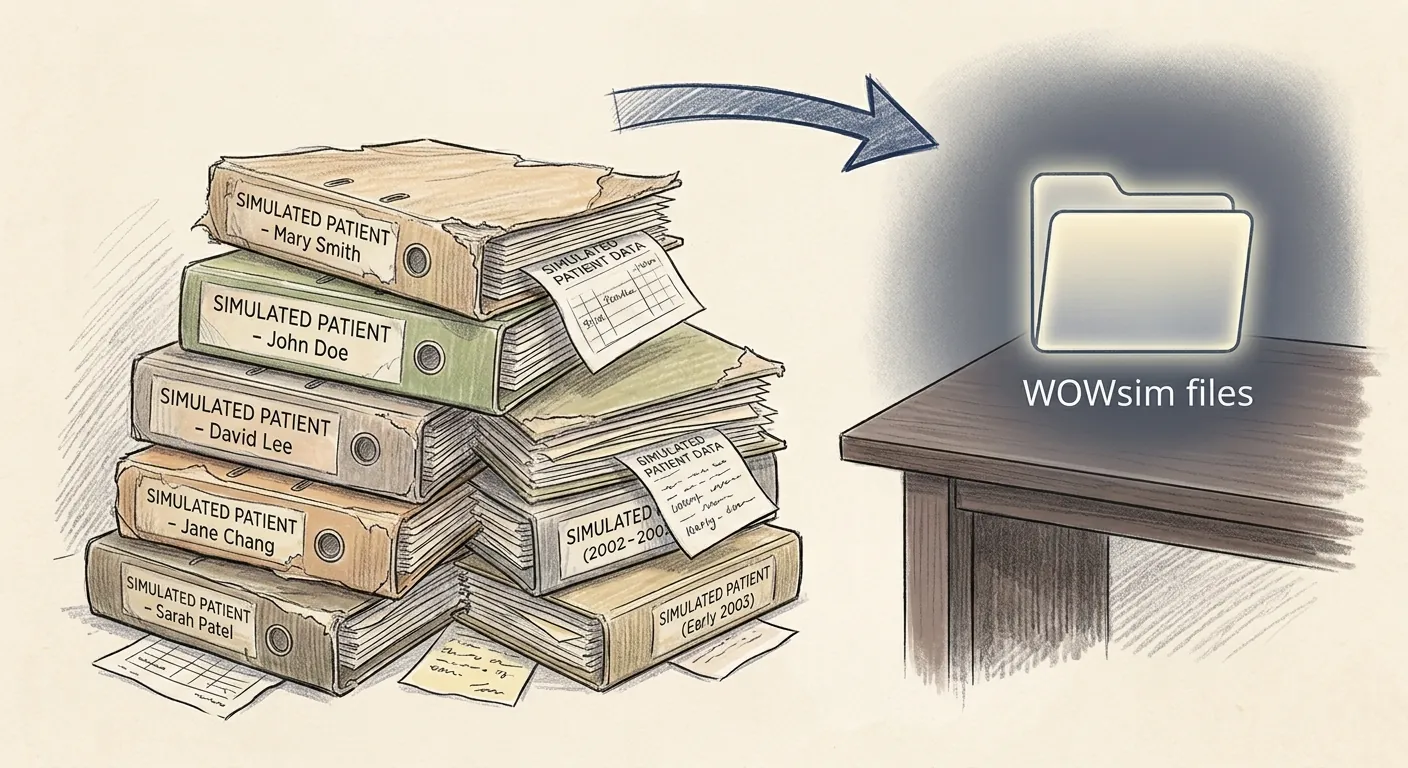
If you run simulations on paper, you’ll know the storage boxes: scruffy folders, pages falling out, oversized EWS and medication charts stapled together, and pencil entries to rub out after every session. Did someone use a pen? Then it’s Twink or a new chart.

WOWsim replaces all that. Scenario files load instantly, run the same every time, and reset with one click. All that’s left on the table is a slim envelope with the runsheet, handover card, patient labels and blood gas results.

Sketch: a stack of worn, overflowing paper patient folders, with an arrow pointing to a single folder labelled WOWsim files.

Get in touch

New Zealand healthcare and education providers can try WOWsim free for three months, starting when it suits your teaching, with nothing to pay and nothing to cancel. We’ll turn one of your scenarios into a .wowsim file, so you can try it with a case you already run. Based elsewhere? We’d still like to hear from you.